

The question of where to eat well in Zagreb is asked often, and rarely answered well. The list that circulates this year is not the list that circulated five years ago. Names change, ownership changes, chefs come and go. What does not change is a small set of markers that quietly tell you which kitchen knows the work, and which one only looks like it does.
This is a guide for those who want to decide on their own.
Where the fish came from, before anything else.
Zagreb sits three hours from the sea. The supply chain is never perfect. A good fish restaurant in Zagreb is not the one with the longest menu, it is the one with the shortest.
Whole fish, weighed at the table before it goes to the fire, listed by origin. What arrives from the Adriatic that morning is what is offered that evening. What does not arrive is not invented. A restaurant that offers you five kinds of "fresh" fish on a Saturday in February is probably not telling the whole story.
The same rule holds for meat, vegetables, mushrooms, truffles. The season is the season. White truffles come in from October to December and stop. Porcini are autumn, asparagus is spring. A kitchen that respects the season shows it on a menu that moves, not on a menu that has read the same for ten years.
Test it directly. Ask the waiter where the fish came from. Ask where the pasta is rolled. Ask about the olive oil (region, year). If the answers come quickly and concretely, the kitchen knows what it is doing. If the answers come as "our supplier is a secret" or "chef chooses," that is not insider mystery, it is missing control over the chain.
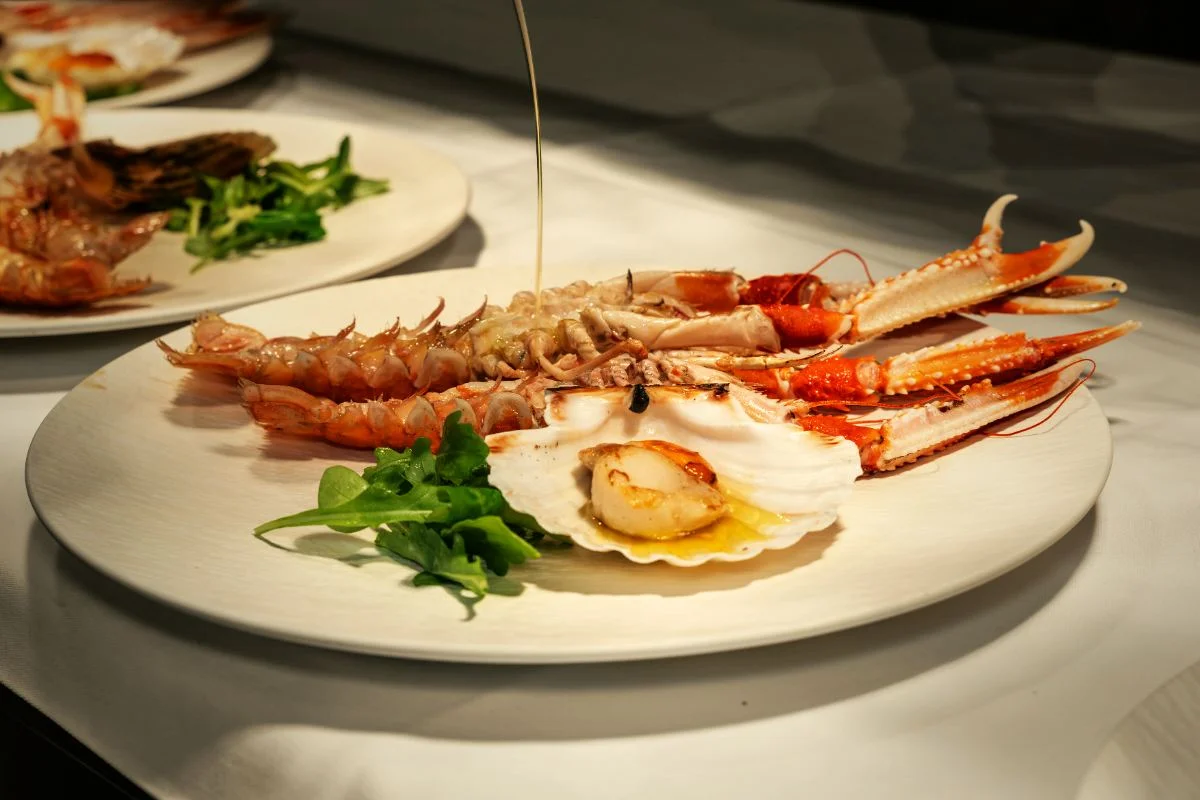
An address that has not moved in decades.
Zagreb opens and closes restaurants quickly. The average lifespan of a restaurant, depending on which study, sits somewhere between three and seven years. An address that stays past ten knows something. An address that crosses twenty is already an institution.
The reason is simple. Guests come back only if the level holds. A kitchen cannot fake two decades. Local suppliers, who matter most for what arrives fresh, work with restaurants that pay on time and order on repeat. Waiters who stay for ten years carry institutional memory that cannot be trained in a week.
Gallo, for one, has been at the same Hebrangova address for 23 years now as an Italian restaurant in Zagreb. The hand has changed over time, today the house is run by the Tomlinović family from Hvar, but the address, the courtyard, and the work have stayed in place.
The hand changes. The address remains.
When you choose a restaurant in Zagreb, ask when it opened. Under five years means the kitchen is still finding itself. Over ten speaks for itself.
An open kitchen as a position, not a style.
Open kitchens have become fashionable. Walls came down because "it looks good now." That is style, not a position.
A real open kitchen means the guest can see the work at any moment. Pasta rolled in plain view. Fish filleted on the counter, not in a back room. Truffles shaved at the table. There is no bluff possible: the guest sees everything.
A restaurant that has an open kitchen but where the cook stands with his back to the room, who does not speak with the waiter, whom guests never see in motion, has an open kitchen for the look. That is not the same thing.
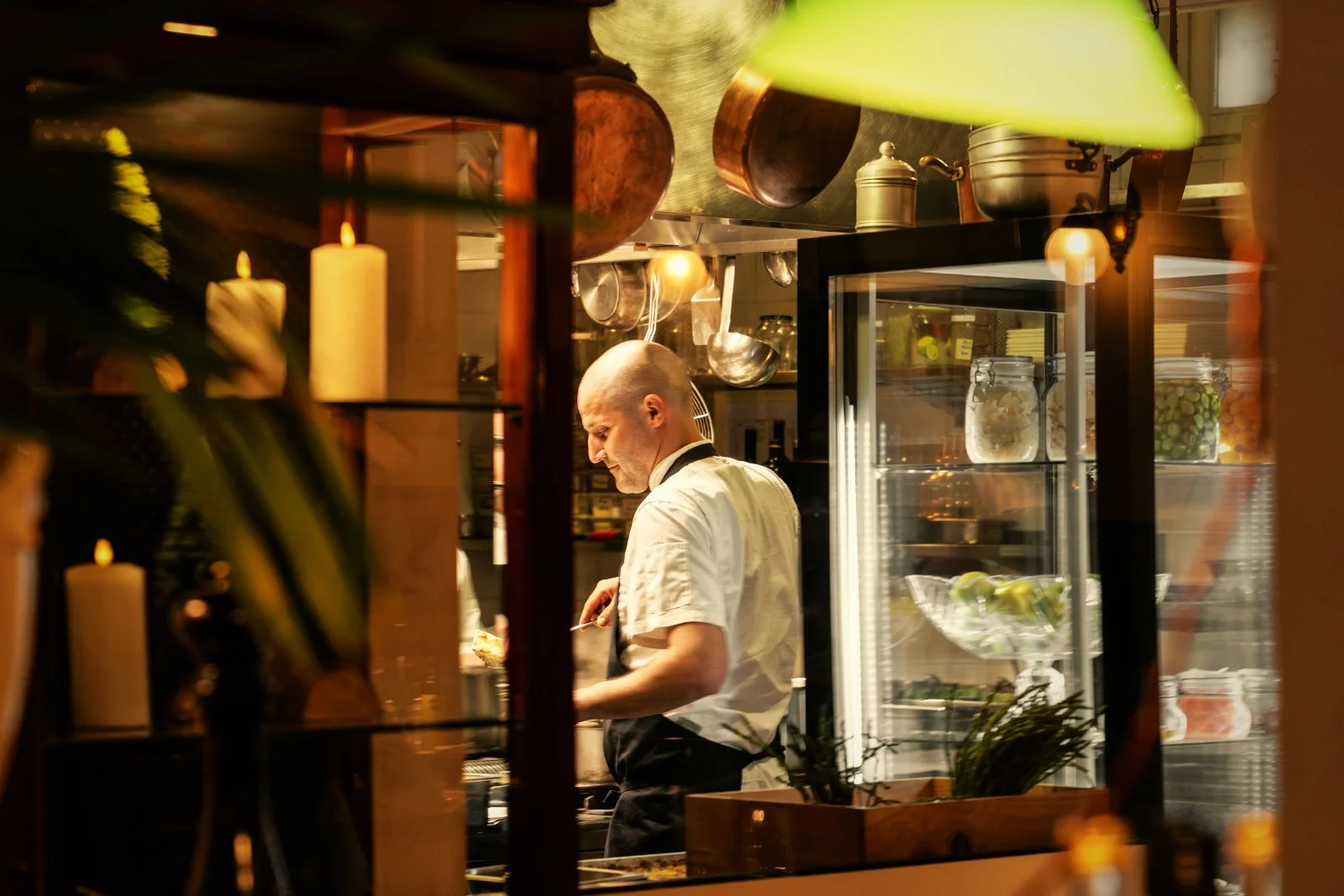
At Gallo the kitchen has been open to the room since long before the trend. The reason was straightforward: if the guest can see what is happening, nothing needs to be explained.
A wine list built over years, not bought in a season.
The wine list is perhaps the most honest indicator of a serious house. It cannot be bought, it has to be built. Labels are gathered over years, allocations are earned through loyalty to the maker, older vintages are waited for.
A restaurant with fifty labels, all young, all standard, reads like any wine shop. A restaurant with over eighty labels that spans regions and vintages, that carries older years, that works directly with producers, is a different conversation.
Ask the sommelier for a recommendation, not for "the house wine." If the recommendation comes with a clear note on the maker, the year, and the composition, the wine programme is serious. If it comes as "we have a nice sparkling tonight," the sommelier is filling a slot, not following a passion.
What to look for on the list
- More than one region, not only Croatian, not only Italian.
- Older vintages, not only the last harvest.
- Small producers beside the big names (a sign the sommelier follows the scene).
- All categories present: sparkling, white, red, dessert, rakija.
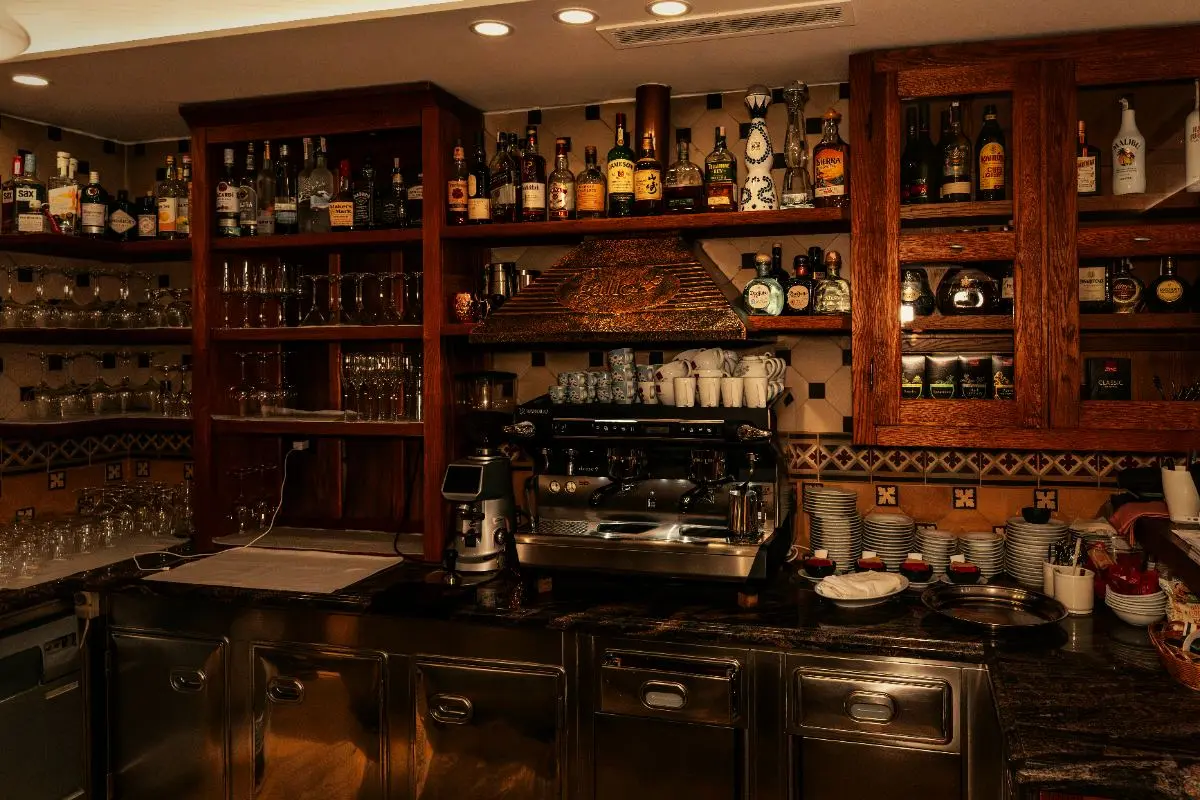
The quiet of a house that has nothing to prove.
The last marker is the most subtle. A serious fine dining restaurant in Zagreb, whether or not it appears on the Michelin star restaurants in Zagreb map, does not need to shout.
A website without big words. No "unforgettable experiences," no "exclusive ambience" that means nothing in particular. Instead: concrete names of dishes, concrete prices, an address, opening hours. A restaurant that has something to show, shows it. A restaurant that has something to say, says it once.
A doorway without large signage, without "discover," without copy that reads like a marketing brochure. A quiet approach, a calm room, a waiter who does not explain what you are drinking or eating until you ask.
Loyalty from the room. Restaurants that live on regulars live on reputation, not on marketing. Sit at a good house for an evening and watch how many guests the waiter greets by name. If the number is high, the place has a reputation you do not need to verify on your own.
The most quoted line about Gallo is also the shortest:
"Best dinner in Croatia at this quiet courtyard hideaway. The service is excellent."
Steve from Portland. TripAdvisor, 2017.
He named the place a hideaway, which is fair. The restaurant is not visible from the street. You enter through the courtyard.
Five markers, one conclusion. A serious restaurant in Zagreb is not found by ranking. It is found by attention. Anyone who knows where to look sees the difference between what looks like a serious kitchen and what actually is one.
And for those that are, the address is enough.
— Frequently asked —
- How do I know the fish is fresh in Zagreb?
- By the eye and the gill. Fresh fish has bright, full eyes (not cloudy), gills the colour of pomegranate (not grey), and firm flesh that springs back. A serious restaurant will bring the whole fish to the table on a tray before it goes near the fire.
- Do I need to reserve a table in Zagreb?
- For anything above casual, yes. Saturday evenings fill from Wednesday in better houses. Walking in without a booking on a weekend means very early, very late, or nowhere. Phone or Google Reserve works for most addresses.
- How much does a proper dinner in Zagreb cost?
- Without wine, 35 to 50 euros per person for three courses in a serious kitchen. With wine, 60 to 100. Whole fish is sold by the kilo, from 80 to 125 euros depending on species. Better restaurants put the prices on the menu, not on the scale.
- What is the difference between Croatian and Italian Mediterranean cooking?
- Croatian coastal cooking is the Italian school shifted east. The same Adriatic fish, more often on charcoal than in sauce. Hand-made pasta from the Italian tradition meets Dalmatian fish stews. Wine: indigenous Croatian grapes (malvazija, plavac) sit beside the Italian list.
- Will the menu be in English?
- In the better houses, yes. Many menus carry the Italian name beside the Croatian one, which helps. Waiters in the city centre almost always speak English; some also German, Italian, or French.
- What dishes are worth ordering specifically in Zagreb?
- Hand-made pasta with truffles (white from October to December, black year-round). Adriatic fish, whole, salt-baked or grilled. Octopus with potatoes. Pjetlić s mlincima at Gallo. Anything seasonal that is not on the menu next month.